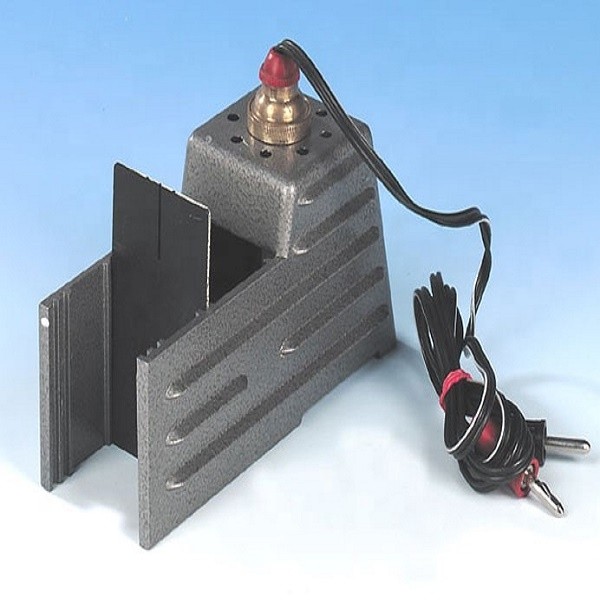
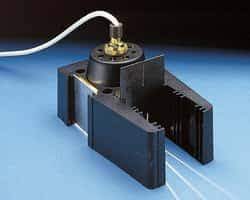
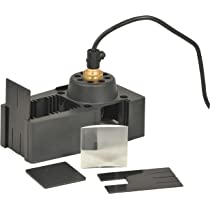
A ray box is an optical instrument that is commonly used in physics experiments to demonstrate the properties of light. It consists of a rectangular or square-shaped box made of plastic or metal, with a light source, such as a light bulb or a laser diode, mounted on one end. The box also has a number of different holes or slots cut into it, which can be used to insert various optical components, such as lenses, prisms, mirrors, and diffraction gratings.
The purpose of a ray box is to create a beam of light that can be used to demonstrate the properties of light, such as reflection, refraction, diffraction, interference, and polarization. By using the various optical components that can be inserted into the box, the properties of the beam of light can be manipulated and studied in detail.
A complete ray box typically includes the following components:
Light source: This can be a light bulb or a laser diode, which emits a beam of light.
Lenses: These can be convex or concave lenses, which can be used to focus or diverge the beam of light.
Prism: A prism can be used to split the beam of light into its component colors, or to deflect the beam of light at a certain angle.
Mirrors: Mirrors can be used to reflect the beam of light at a certain angle.
Diffraction grating: A diffraction grating can be used to split the beam of light into its component wavelengths, creating a spectrum.
By manipulating these components, the ray box can be used to create a wide range of optical effects and to explore the properties of light.