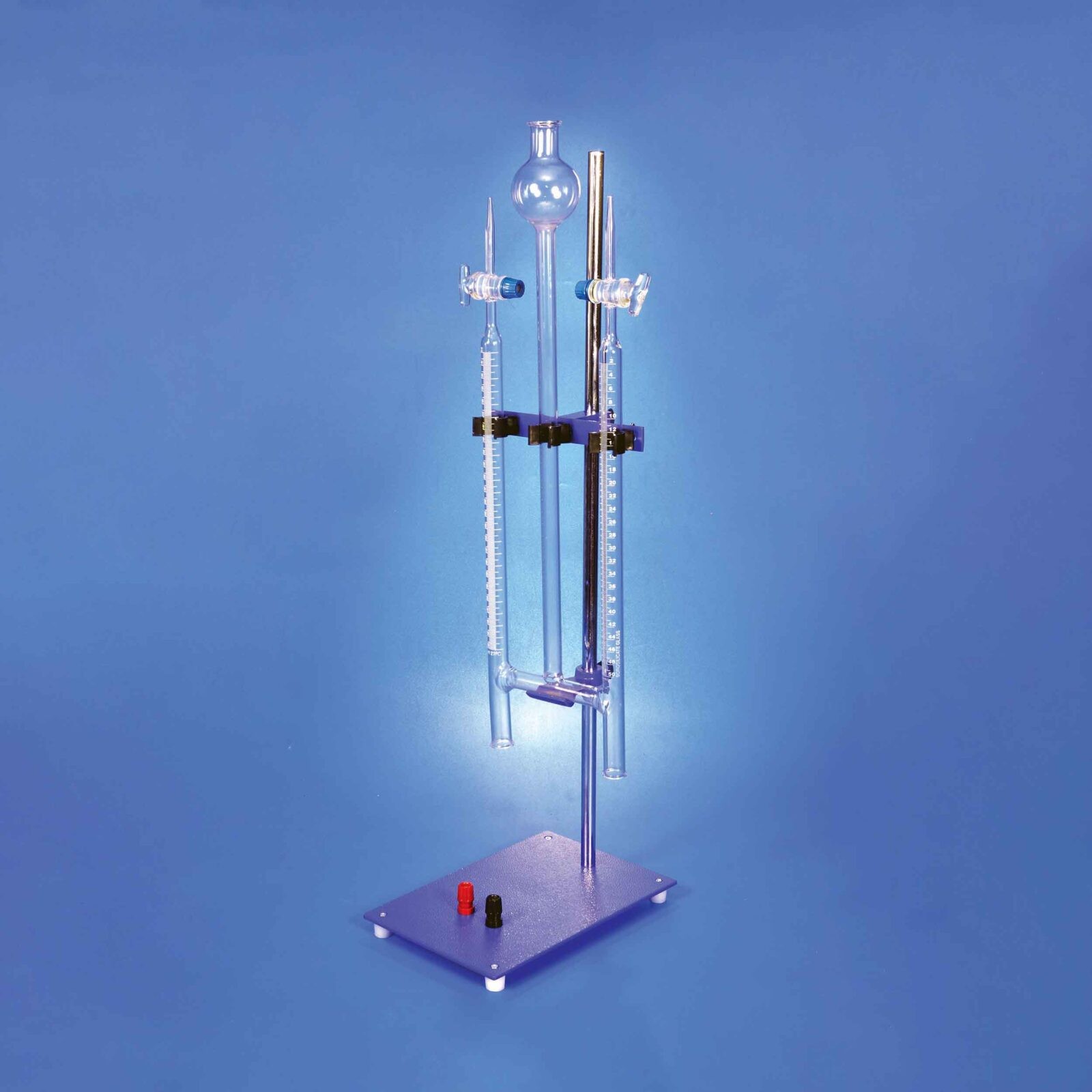
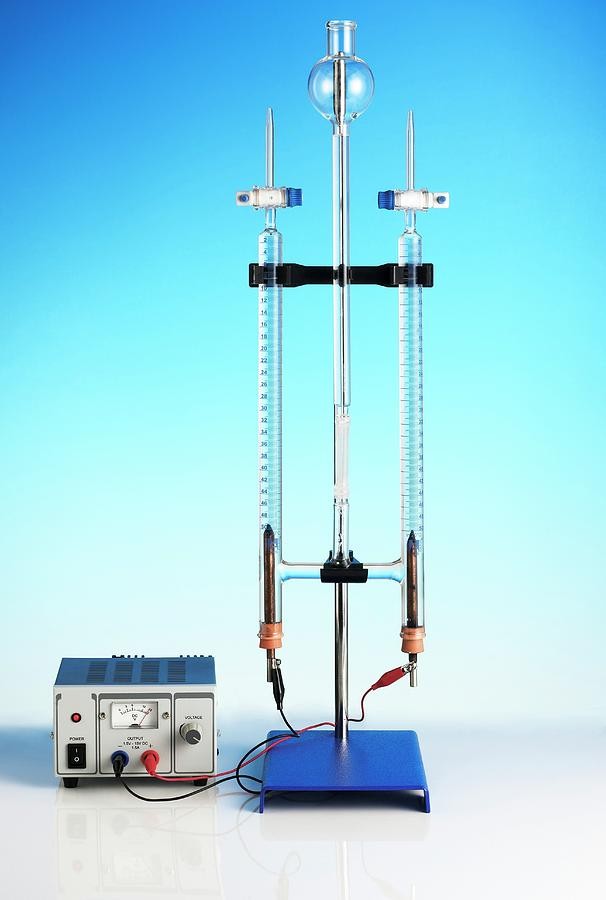
The Hoffman voltameter is an apparatus used to electrolyze water and to demonstrate the composition of water by volume. It consists of a glass container filled with an electrolyte solution, usually dilute sulfuric acid, and two electrodes - a carbon or platinum anode and a platinum cathode. When an electric current is passed through the solution, hydrogen gas is generated at the cathode and oxygen gas is generated at the anode. The gases are collected separately in tubes over the electrodes, allowing for the measurement of their relative volumes. The Hoffman voltameter is commonly used in chemistry classrooms to teach the principles of electrolysis and the composition of water.