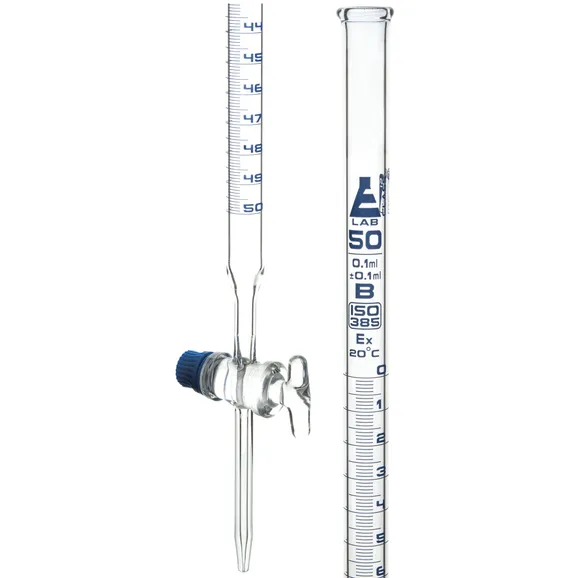
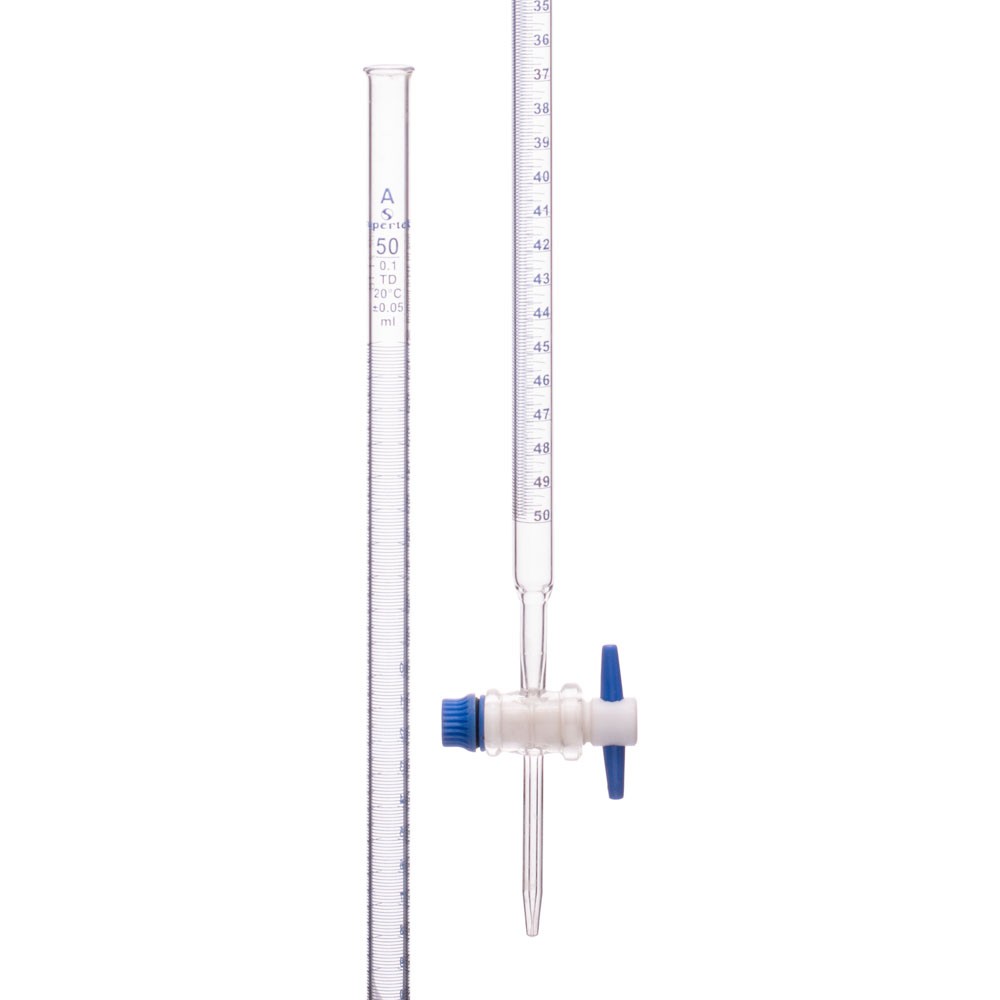
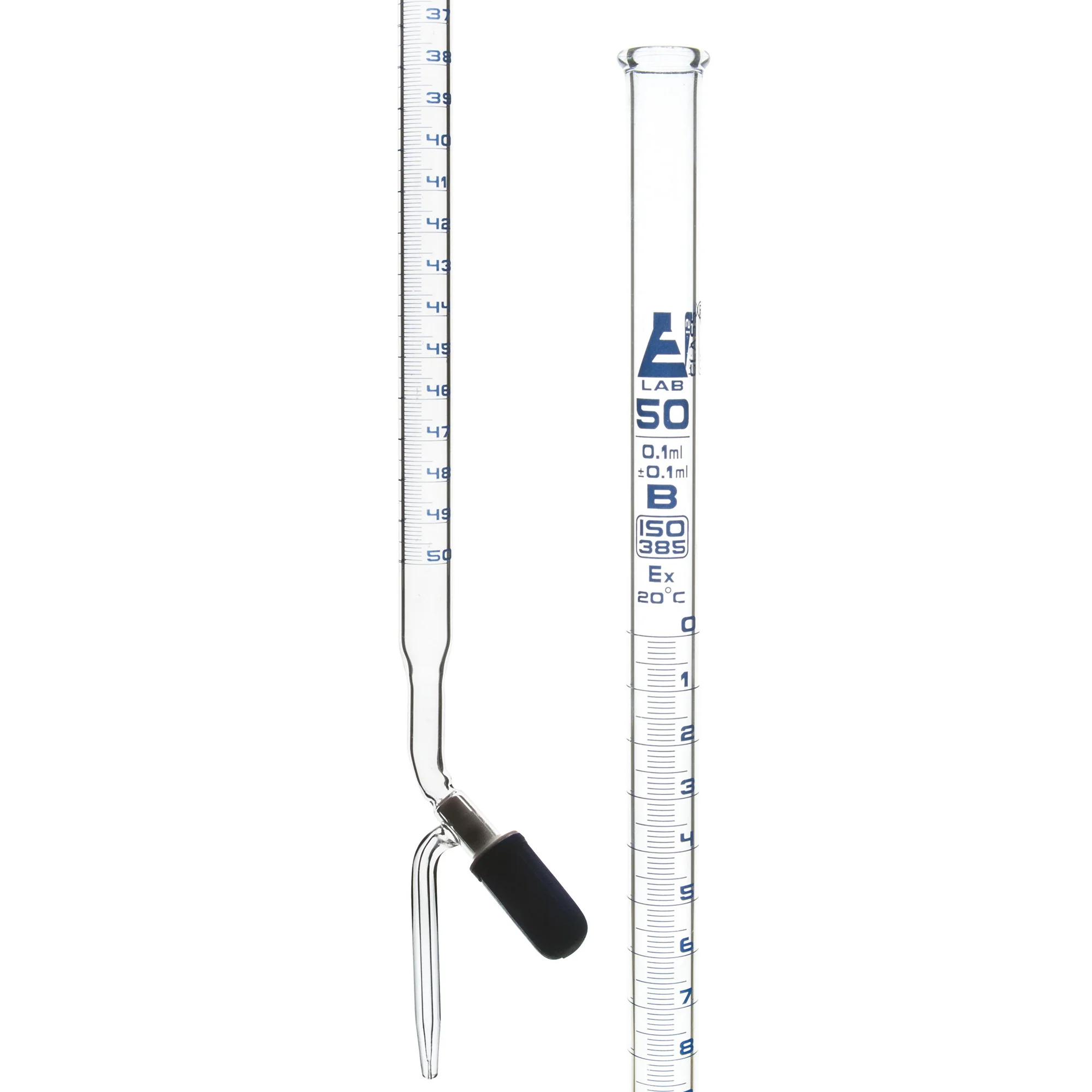
A burette is a laboratory apparatus used for dispensing precise and accurate volumes of liquid reagents. It is a long, narrow tube made of glass, plastic, or other transparent materials, with graduations marked along the length of the tube. The graduations can be in milliliters or cubic centimeters, depending on the volume of liquid to be dispensed.
The burette is mounted vertically on a stand and can be clamped to hold it in place. The liquid is dispensed from a stopcock at the bottom of the burette, which can be opened or closed to control the flow of liquid. The stopcock is typically made of glass or plastic and has a rubber or plastic tip to prevent leakage.
Burettes are commonly used in chemistry, biology, and other scientific laboratories, particularly for titrations, which involve the precise measurement of the volume of one reagent required to react with a known volume of another reagent. They are also used in other applications that require accurate dispensing of liquid reagents, such as in the preparation of solutions or in analytical chemistry. Burettes are available in different sizes, with the most common sizes being 10 mL, 25 mL, and 50 mL.