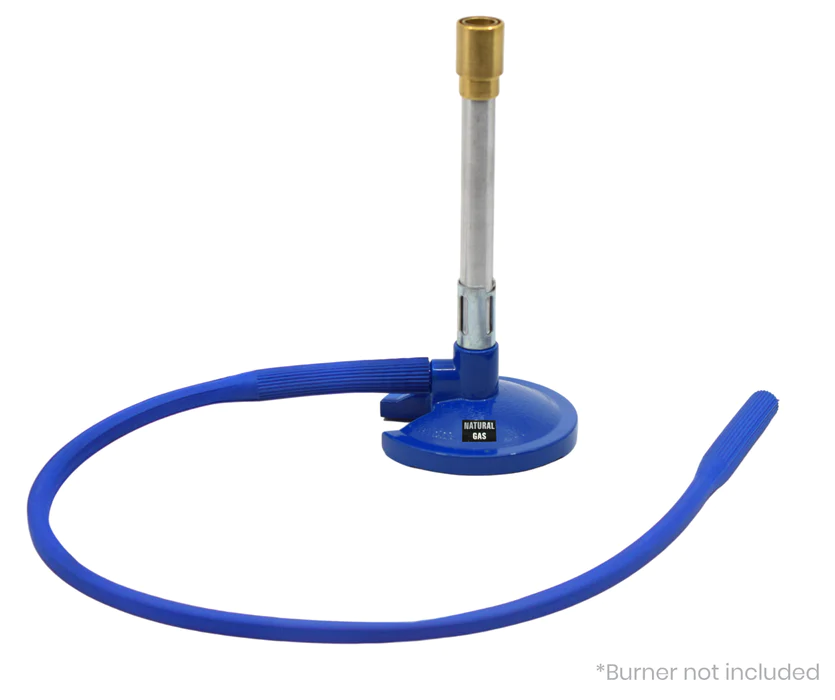
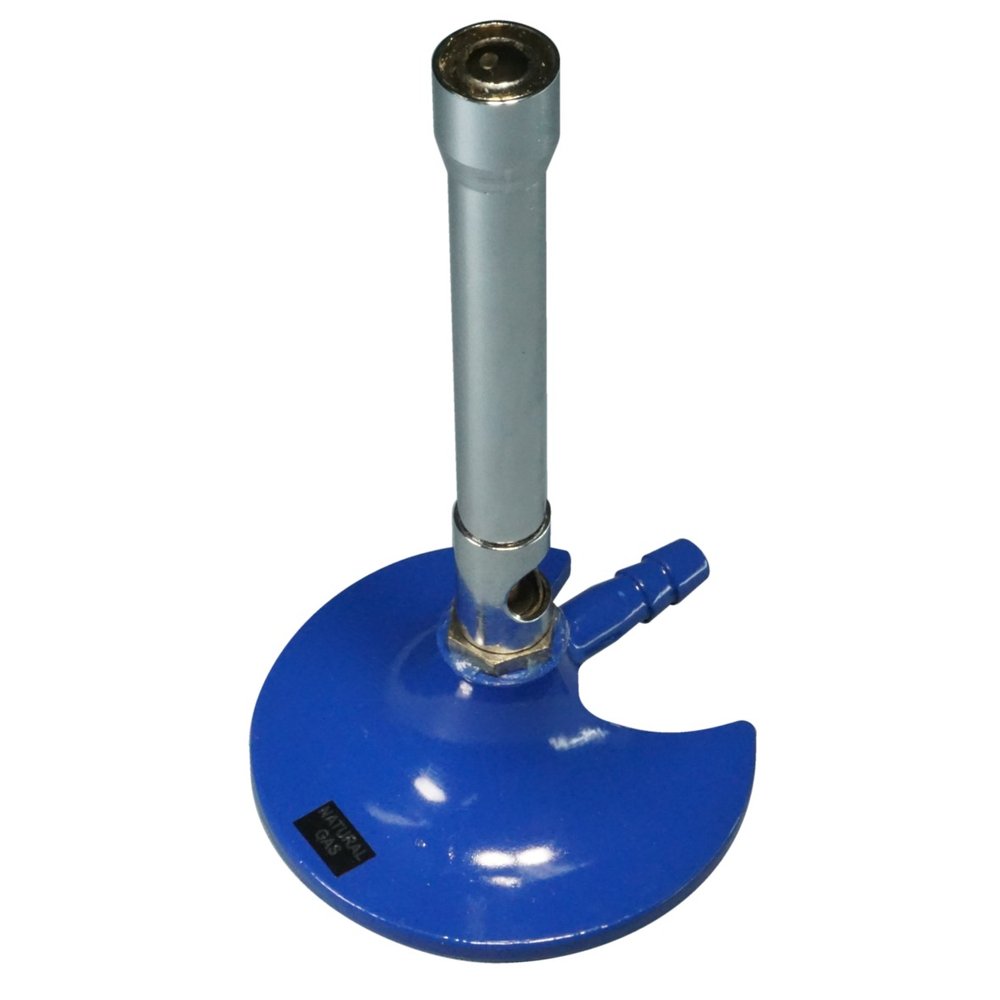
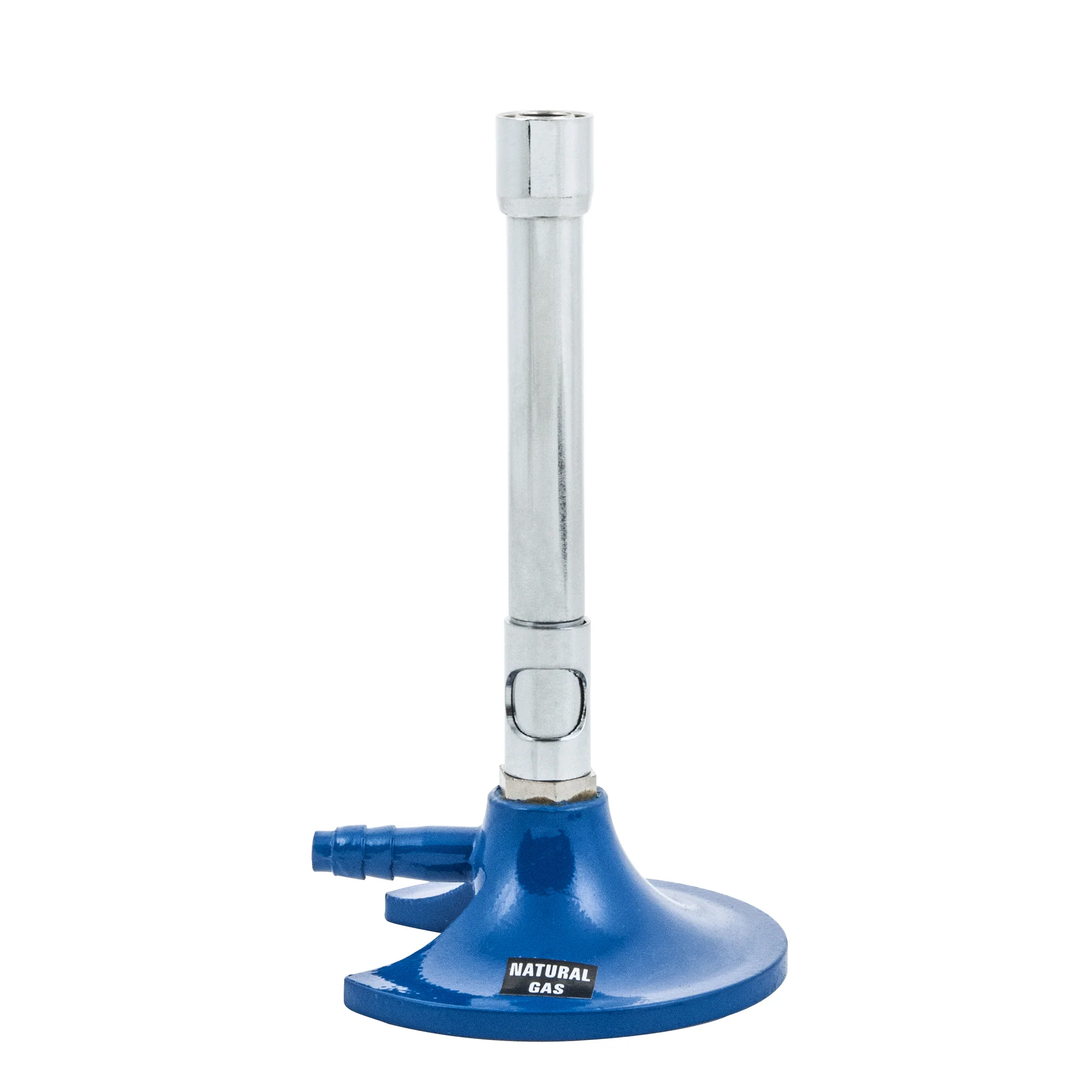
A Bunsen burner is a laboratory apparatus commonly used for heating and sterilizing materials. It consists of a metal base, a vertical metal tube, and a gas inlet at the bottom. The base typically includes a regulator valve to control the flow of gas and a built-in platform to support a heat-resistant mat or wire gauze.
The gas flows up through the tube and is mixed with air at the top, creating a controlled flame that can be adjusted to suit different applications. The flame is usually blue, but can be adjusted to be more yellow or more intense depending on the temperature needed for the experiment.
Bunsen burners are commonly used in chemistry, biology, and physics labs for a variety of applications, including heating test tubes, sterilizing equipment, and performing flame tests. They are a simple and reliable source of heat and can be easily adjusted to suit the needs of the experiment. They can be connected to a variety of fuel sources, such as natural gas, propane, or butane. Safety measures, such as the use of a fume hood or wearing protective equipment, should be taken when using a Bunsen burner.