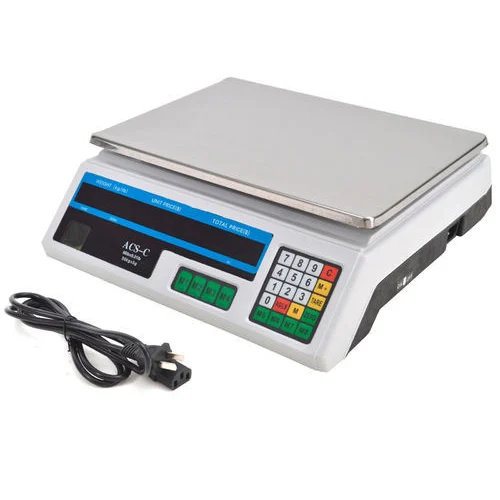
An electronic balance is a type of weighing instrument that uses electronic components to measure the weight of an object. It typically consists of a weighing platform, a load cell, and an electronic display that shows the weight measurement.
Electronic balances offer several advantages over traditional mechanical balances, such as higher precision and accuracy, faster measurement times, and greater convenience. They can measure weight in a variety of units, including grams, kilograms, ounces, and pounds, and some models also offer additional features such as taring, counting, and percentage weighing.
Electronic balances are commonly used in laboratory settings for precise measurements of chemicals, powders, and other small objects. They are also used in commercial and industrial applications, such as in the food industry for portion control or in shipping and receiving for weighing packages.