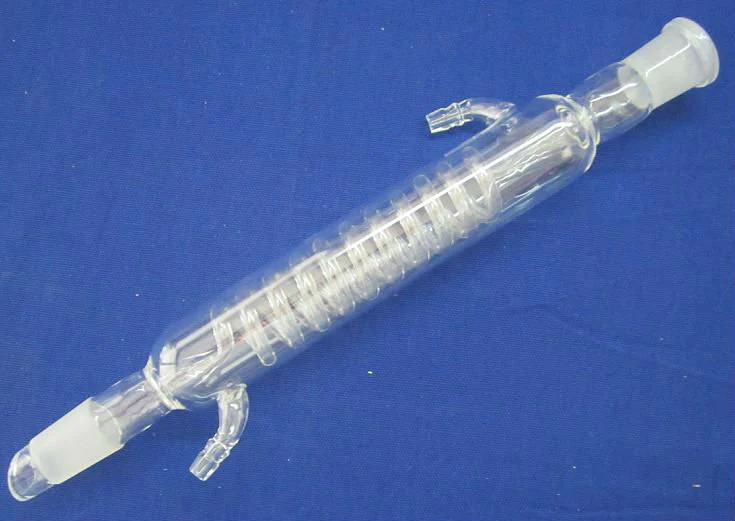
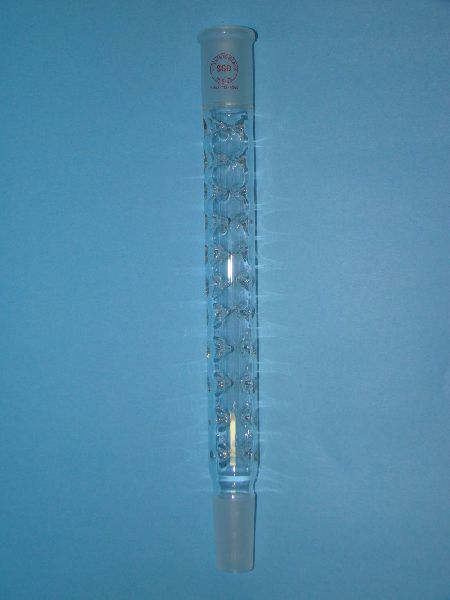
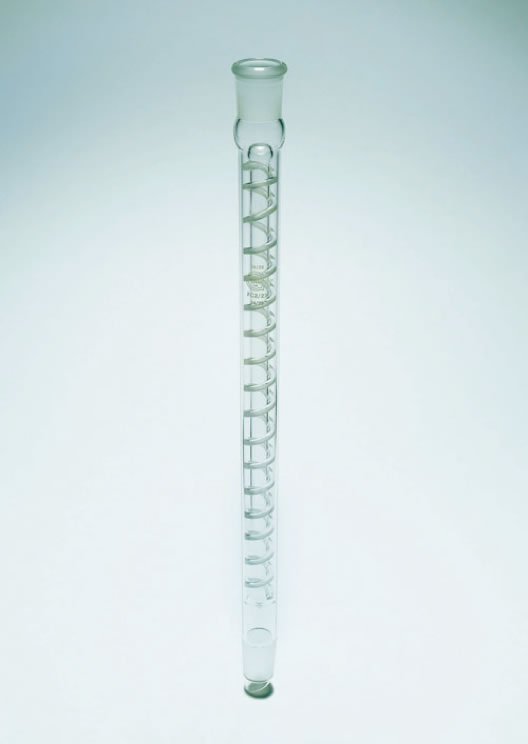
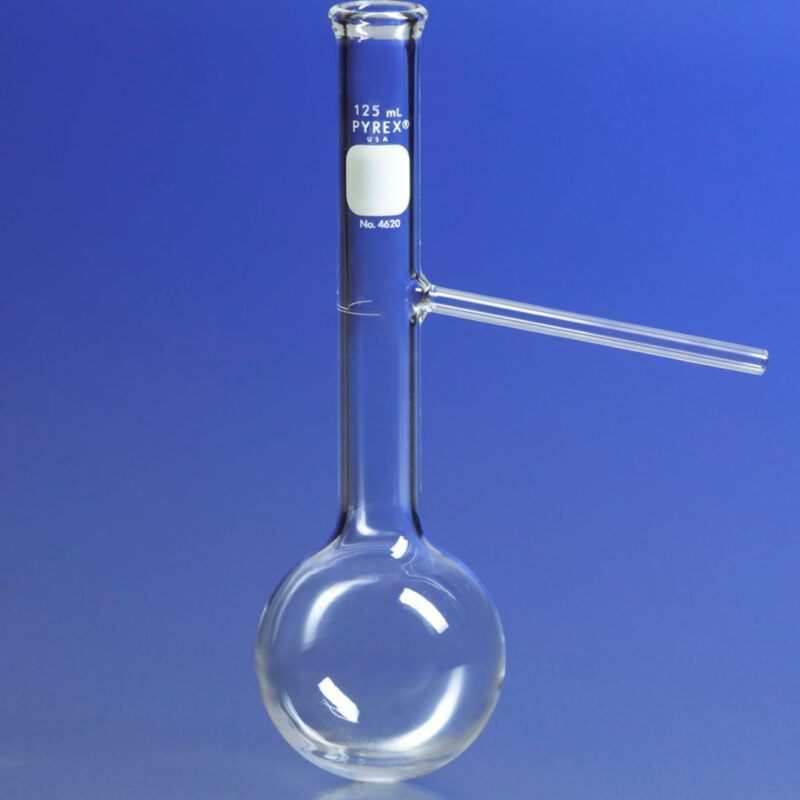
A fractionating column is a piece of laboratory equipment used in distillation processes to separate a mixture of liquids into its individual components based on their boiling points. It is a long, vertical tube with multiple internal plates or packing material that allows for repeated vaporization and condensation of the mixture as it moves up the column.
As the mixture is heated, the components with lower boiling points will vaporize first, rise up the column, and condense on the internal plates or packing material. This process, called fractionation, allows for the separation of the different components based on their boiling points.
The fractionating column is typically made of glass, stainless steel, or other durable materials that can withstand high temperatures and chemical reactions. The internal plates or packing material can be made of various materials, such as glass beads, metal mesh, or ceramic, and are chosen based on their ability to promote vaporization and condensation.
Fractionating columns are used in a wide range of applications, including the production of chemicals, petroleum refining, and the purification of organic compounds. They are an important tool for separating complex mixtures into their individual components and are a crucial component of many chemical and industrial processes.