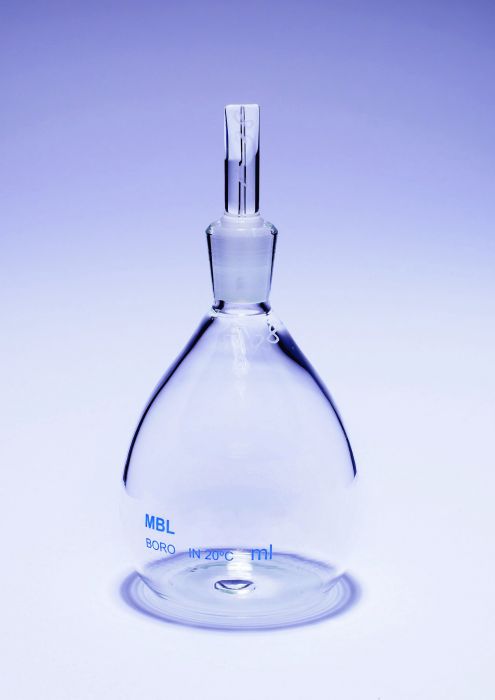
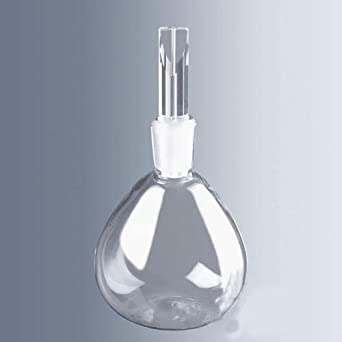
A density bottle is a laboratory device used to determine the density of a liquid or solid material. It typically consists of a small, narrow-necked bottle made of glass or plastic, with a tight-fitting stopper or cap.
To use a density bottle, the bottle is first weighed when it is empty and dry. Next, the bottle is filled with a sample of the material whose density is to be measured, and weighed again. The difference between the two weights gives the weight of the sample.
The volume of the sample can then be calculated by measuring the volume of the density bottle. The density of the material is then calculated by dividing the weight of the sample by its volume.
Density bottles are available in a range of sizes, with smaller bottles typically used for liquids and larger bottles used for solids. They may also be designed with various features, such as thermometers or graduated scales, to make measurements more accurate and precise.
Overall, a density bottle is an essential tool for any laboratory or scientific setting where the density of materials needs to be measured or compared. They are simple to use, accurate, and capable of producing reliable results.