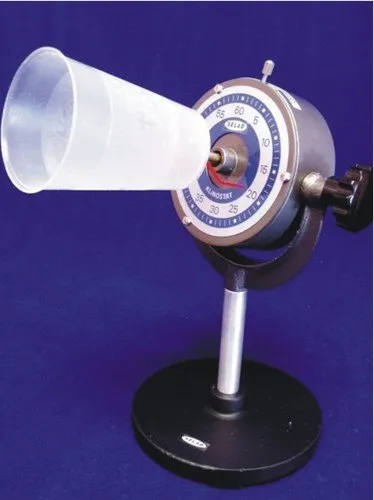
A clinostat is a laboratory apparatus used to simulate a microgravity environment for biological experiments. The clock type clinostat is a particular type of clinostat that uses a clock mechanism to slowly rotate the sample platform, rather than an electric motor.
The sample is typically placed on a rotating platform that is mounted on a clock mechanism. As the clock ticks, the platform rotates slowly, providing a continuously changing orientation for the sample. This allows the sample to experience a variety of different gravitational orientations over time, simulating a microgravity environment.
Clock-type clinostats are commonly used in biological research to study the effects of microgravity on plant growth, cell differentiation, and other processes. They are also used in other fields such as materials science and physics to study the effects of microgravity on various materials and physical phenomena.
Clinostats can be designed to accommodate a range of different sample sizes and shapes, and can be customized to meet the specific experimental requirements of the researcher. They are often used in combination with other laboratory apparatus, such as microscopes or spectrophotometers, to analyze the effects of microgravity on biological or physical samples.