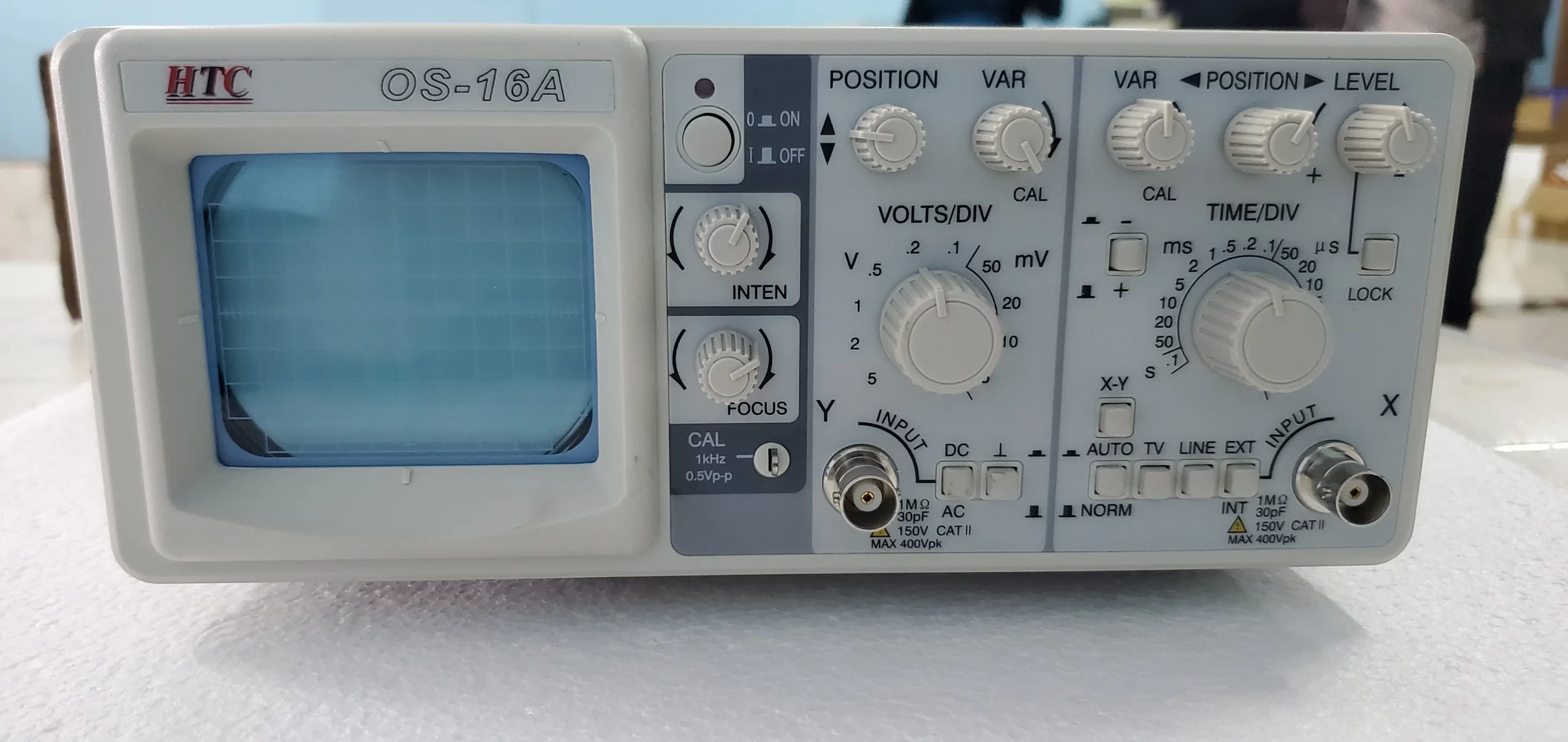
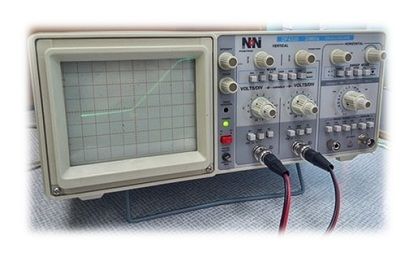
A cathode ray oscilloscope (CRO), also known as an oscilloscope, is an electronic instrument used to display and analyze waveform signals. It works by generating a beam of electrons that is directed towards a screen, which displays the waveform as a graph.
The CRO consists of a cathode ray tube (CRT), an electron gun, a deflection system, and a screen. The electron gun generates a beam of electrons that is directed towards the screen, which is coated with a phosphorescent material that emits light when struck by the electrons. The deflection system controls the position of the beam on the screen, allowing it to trace out the waveform.
The waveform is typically displayed on the screen as a graph with time on the horizontal axis and voltage on the vertical axis. The CRO can be used to measure various properties of the waveform, such as amplitude, frequency, and phase, and can be used to analyze and troubleshoot electronic circuits and systems.
CROs are commonly used in electronics, telecommunications, and other fields that require the analysis of waveform signals. They are available in a variety of sizes and configurations, from handheld models to large benchtop units with advanced features and capabilities.